
Unbreakable Bonds
From 24 to 31 March, Mohamed Ayib Salim Daffé, Secretary General of PASTEF, Senegal’s ruling party, led a delegation of senior officials on a visit to China. The two sides held in-depth discussions on governance, economic cooperation and sporting events. Following the visit, he talked to ChinAfrica to share his views on the development of Sino-Senegalese and Sino-African relations on the occasion of the 70th anniversary of diplomatic relations between China and Africa and the China-Africa Year of People-to-People Exchanges.
ChinAfrica: You have visited China on several occasions and are aware that the Communist Party of China (CPC) has a fundamental principle in governing the country: always putting the people first. What are your thoughts on this?
Mohamed Ayib Salim Daffé: Certainly, we have observed this in practice during our various visits. We have witnessed China’s remarkable modernisation, with impressive technological development, as well as attention to people’s concerns through key issues such as food, housing and transport. China has lifted millions of its citizens out of poverty and helped people to attain a decent standard of living.
President Xi Jinping attaches particular importance to the quality of governance to meet the expectations of the Chinese people. This is outlined in several works that were given to us and which we have begun to read. Within the framework of President Xi’s thinking, we observed a particular emphasis on strengthening the discipline within the CPC and its responsiveness to the concerns of the people. Several guidelines have been adopted, notably the Eight-Point Regulation and the Four Comprehensives. This constitutes an original and practical approach, resulting in tangible and perceptible outcomes.
China has recently concluded its Two Sessions, during which the 15th Five-Year Plan (2026–2030) was approved. In your opinion, how might this institutional framework inspire African countries, considering their national circumstances?
We were impressed by the innovative approach used in formulating this 15th Five-Year Plan. We have learned about the 3 million opinions collected through an online campaign. Administrative bodies at all levels - local communities, provinces, municipalities, etc. - were able to express their views. These were compiled and synthesised at the central level before the plan was adopted by the National People’s Congress. Numerous studies and surveys were conducted to establish the scientific and theoretical foundations of the projections outlined in this plan. Both in its drafting and content, the plan reflects the interests of the Chinese people under the leadership of the CPC and also considers the international context, characterised by the emergence of various challenges and opportunities.
This exemplary five-year plan is inspiring and can be adapted to our context to define our own development path with much greater precision. Vision Senegal 2050 aims to make Senegal, by 2050, a sovereign, just and prosperous state, built around strategic pillars of a competitive economy, high-quality human capital and social equity, sustainable land use, regional engagement, and good governance. Its content is fully aligned with the guidelines of the Chinese five-year plan.
China is implementing a zero-tariff policy for all products from 53 African countries with which it maintains diplomatic relations. In which sectors would you like to see more Chinese companies investing in Senegal?
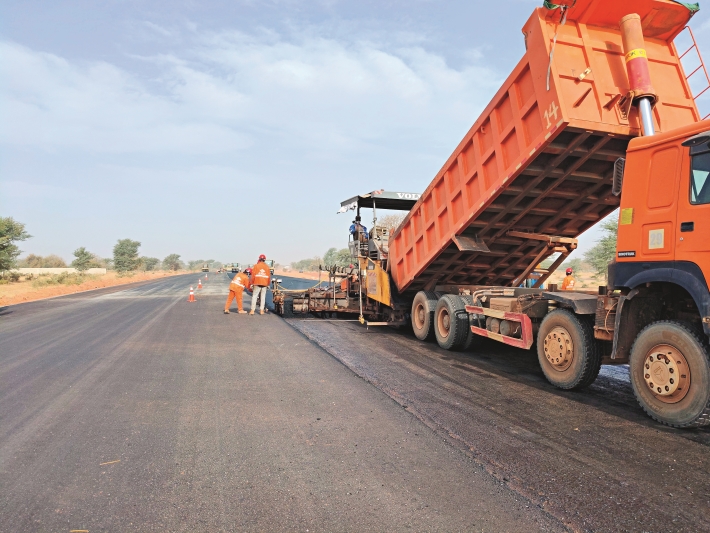
We would like to see increased investment from Chinese companies in the sectors driving growth, as defined in our Vision Senegal 2050. These include, first and foremost, the manufacturing industry: assembly plants for household appliances, vehicles, agricultural machinery and similar products. There are also the agri-food industries and agriculture in general, as Senegal is aiming for food security. Agriculture encompasses livestock farming, non-timber forest products, fisheries, and aquaculture.
This also applies to the extractive industries, with oil and gas fields that have begun to be exploited. We would like to intensify exploration and further develop the identified fields. The experience of Chinese companies in this area can be of great benefit to us. Finally, there is also significant potential in high value-added services, including tourism, cultural industries, and the digital sector. We already have a very good working relationship with Chinese companies such as Huawei. Cooperation can be strengthened with other companies to implement the Technological New Deal, Senegal’s digital development plan.
Next October, Senegal will host the fourth Summer Youth Olympic Games (YOG), a first for the African continent. How do you view the significance of this event?
Our population is predominantly young and very active in sport. Hosting the YOG is a great opportunity for Senegal to showcase its expertise and talent, and to welcome delegations from around the world in the spirit of the Olympic movement.
This is the first time Africa has hosted this event, which presents a challenge for us and for all African countries to contribute to the international standing of Senegal and Africa as a whole, and to demonstrate that the continent has the capacity to successfully organise major world-class events.
It will also be an opportunity to win medals and showcase the talents of our young people by taking part in competitions. We intend to develop other sports, such as football, particularly to raise Senegal’s profile. There will also be economic and tourism benefits.
What support can China provide to Senegal? What are your expectations regarding future cooperation between China and Senegal in the field of sport?
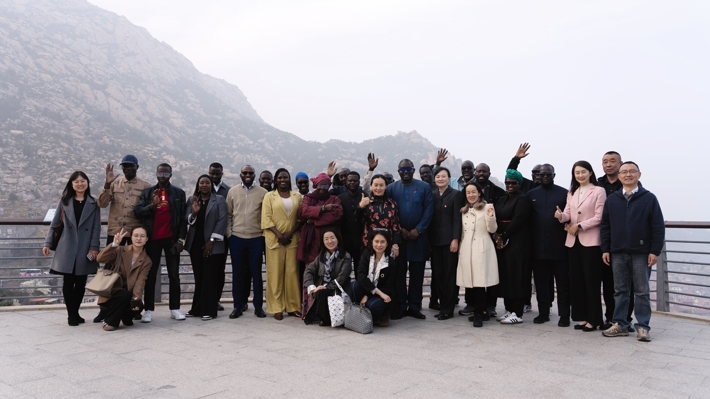
China has a great deal to offer us. Beijing has already hosted the Summer Olympics in 2008 and the Winter Olympics in 2022. In Qingdao, we had the opportunity to visit the 2008 Olympic sailing venue. China therefore already possesses valuable expertise in organising the Olympic Games. We are also counting on its material and financial support for the success of the upcoming youth games.
How do you assess the role of people-to-people and cultural exchanges in the development of relations between China and Africa?
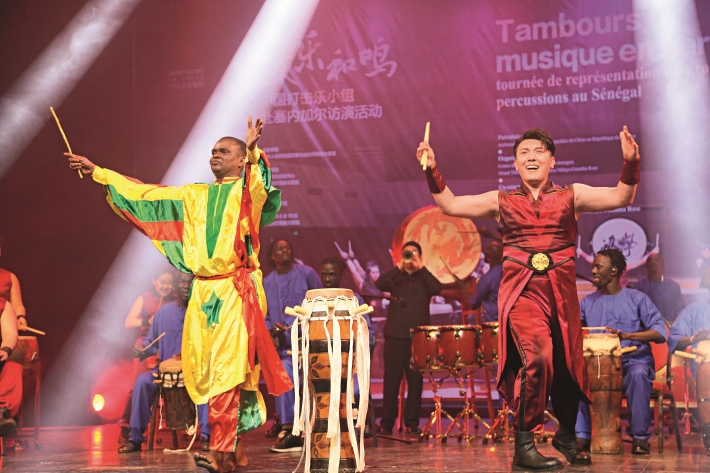
On a cultural and human level, exchanges are growing steadily. A Confucius Institute has been opened at Cheikh Anta Diop University, and we are keen to strengthen these cultural, human and sporting exchanges so that our two peoples can get to know and appreciate one another. The Senegalese people value Chinese culture, particularly through films and cuisine.
We attach great importance to strengthening these exchanges so that our peoples, beyond the exchange of goods and services, may also exchange ideas, values and principles. The “community with a shared future” proposed by President Xi represents something very concrete. Our current visit to China only serves to further strengthen the friendship between our peoples.
