
Preserving the Past, Shaping the Future

There is no better way to appreciate the unique character of Chinese modernisation than by spending 10 years fully immersed in the country. I arrived in China from Madagascar in 2016 as a student and have lived and worked here ever since. This experience has given me a profound firsthand insight into the country.
Chinese modernisation has clearly become one of the most innovative development models in the contemporary world. Instead of marking a sharp departure from the past, it reflects an ongoing process in which tradition and modernity exist together and remain deeply intertwined.
From the moment I arrived, I noticed this coexistence everywhere. My first trips to sites such as the Great Wall, the Forbidden City and the Terracotta Army revealed that rapid urbanisation and technological advances have not diminished the prominence of these cultural landmarks. On the contrary, traditions still hold a central role in the country’s social and cultural life. The same applies to the Spring Festival.
Social and cultural roots
While travelling through China, I was struck by its exceptional plurality. Ways of life, daily routines, local traditions and accents change noticeably from one region to another. This made me realise that adopting a Western model of modernisation would be extremely difficult in a nation of such vast scale and population.
Through my study of Chinese culture and history, combined with direct observation and numerous interactions with local communities, I came to understand that policies are designed with regional and cultural differences in mind. This principle does not undermine national unity; rather, it reinforces social cohesion.
My immersion in Chinese society also enabled me to observe the continued presence of traditional values in modern life. Concepts such as he, often translated as “harmony”, are not confined to philosophical discourse. They are visible in everyday interactions and reflected in the importance attached to social balance, mutual respect and the pursuit of consensus. Instead of being eroded by modernisation, these values accompany and shape social practices both within China and in its international engagements.
China has integrated these values with Marxist thought, showing that a pluralistic and creative form of modernity is possible. For me as a Malagasy, it is particularly inspiring. Chinese modernisation is firmly based on national realities and draws deeply from its history, social organisation and civilisational traditions.
The human dimension of this modernisation became clear to me in 2024 during a visit to a small village near Aksu in the Xinjiang Uygur Autonomous Region. Most striking was how the Chinese government approached the challenges facing the local community. I learned that many of the residents had previously lived in remote and inhospitable areas, often without access to water or electricity. To improve their living conditions, the government launched relocation programmes that provided safer and more comfortable housing.
What impressed me most was not the relocation itself, but the broader approach behind it. The authorities did more than provide housing. They also helped to lay the groundwork for the future, offering employment opportunities for adults and schooling for children. In this sense, development and modernisation are designed not only to address immediate needs but also to create lasting opportunities.
This experience prompted me to reassess my own understanding of modernisation, which I had often viewed mainly in macroeconomic terms, sometimes overlooking quality of life and social wellbeing. It showed me that modernisation must be rooted in everyday life and prioritise improving living conditions while safeguarding the wellbeing of the population. Ultimately, the happiness of the people is paramount.
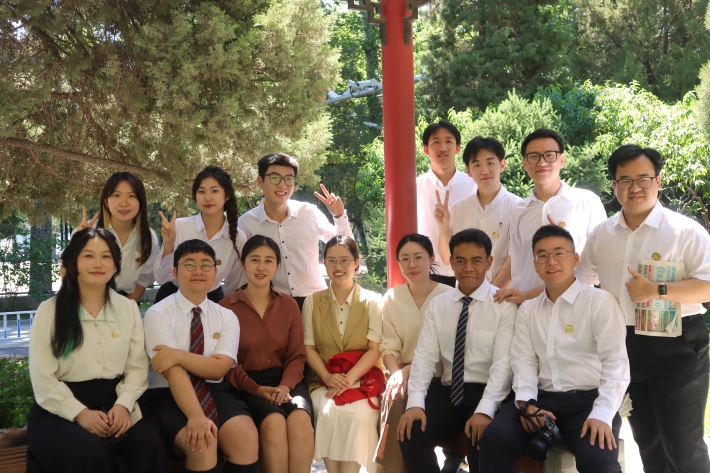
The first graduating class of the Malagasy language programme at Beijing Foreign Studies University poses for a group photo with faculty in June 2025 (COURTESY)
Digital change
China’s modernisation is also closely aligned with the times. Over the past decade, the world has undergone profound transformations, particularly in the field of new technologies, which have become increasingly integrated into daily life.
Since my arrival in China, I have witnessed a rapid digital transformation. In 2016, China was in transition towards a new digital era. At that time, electronic payments were already developing, yet cash and bank cards were still widely used and many establishments accepted only cash. Within just a few years, the situation changed dramatically, and cash payments became increasingly rare.
Today, it is possible to live almost entirely cash-free across China; a smartphone is enough to make payments through WeChat or Alipay. Train travel has also become more convenient. Printed tickets are no longer necessary and simply carrying one’s passport is sufficient for the entire journey.
Importantly, this digitalisation has not come at the expense of traditional culture. In 2023, during a visit to Dunhuang in Gansu Province, I saw museums using advanced technologies to preserve and present ancient cultural heritage. A notable example is the Mogao Grottoes, which date back to 366 A.D. Some murals have been digitally scanned and are now accessible only online in order to limit further deterioration.
After these years spent in China, I have come to believe that the country’s path to modernisation is firmly grounded in its own cultural traditions. China’s experience shows that progress does not require abandoning civilisational roots. Rather, civilisational heritage can serve as a living source of strength, adapting to technological change while remaining rooted in the particular context of each society.
The author is lecturer of Beijing Foreign Studies University
