
Melodies Connecting Cultures
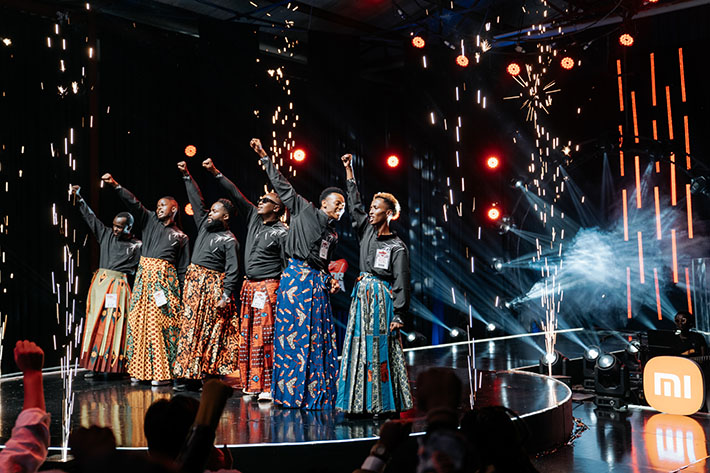

University students, fashion models, street musicians, recent graduates … hundreds of aspiring singers gathered on the campus of the University of Nairobi in Kenya for a music audition. Some had guitars slung across their backs, others drummed rhythms on hand drums, and a few performed melodies they had written on their phones. A long line formed in front of the stage as hopeful participants waited patiently. All were driven by the same dream of sharing their music.
The event represented the audition stage of Sing for Africa, a music talent show produced in partnership between China and Kenya. The programme was launched by Hunan TV International Channel and co-produced with a Kenyan television partner. Open auditions began in November 2025. Following multiple rounds of selection and live performances, the competition ended in December with a grand final that announced the season’s winner and runners-up.
Sing for Africa aims to uncover African musical talent through a competitive format while promoting cultural exchange between China and Africa. Combining local creativity with international cooperation, the programme has evolved into more than just a television show. It demonstrates how cultural exchanges can be realised through popular media.
As the third anniversary of the Global Civilisation Initiative approaches, cultural collaborations involving young people and popular art forms are receiving increasing attention. Programmes like Sing for Africa exemplify this type of cultural collaboration. Instead of imposing a pre-designed television format, the show adapts a Chinese media concept to the local context, guided by African creativity and artistic traditions.

Respecting local preferences
Unlike many earlier cultural projects that simply exported Chinese content overseas, the producers of this show set a different goal from the beginning. Rather than transplanting a Chinese show format directly, they aimed to allow a Chinese television IP to grow independently on African soil. Achieving that goal required one essential principle: respecting local aesthetics.
“When planning the project, our editorial group made one point very clear,” the programme’s producer, Wan Shaoguang, recalled. “We cannot guide them with European, American or Asian aesthetics. We must respect their own sense of style and artistic preferences.”
The concept formed the basis for the entire production. Sing for Africa was created not for Chinese audiences but for viewers in Africa. Rather than portraying a constructed idea of “African culture,” the programme sought to meet the tastes and expectations of local audiences.
Following this principle, Wan and a colleague went to Kenya to assemble a team mostly composed of local professionals. Their reasoning was clear: a programme about African music should be created by people who understand the region’s culture.
The production team chose Motif, a renowned Kenyan music producer, who brought not only his expertise but also an entire creative team. He directed the live band performances and amazed the Chinese producers by blending the sounds of the Chinese flute into the show’s theme song.
“This ensured that the musical style truly reflected African tastes,” Wan explained.
While the Kenyan team handled the creative musical aspects, the Chinese team applied their experience from more than 20 years in television production. They were responsible for crafting the competition structure, planning marketing campaigns, and overseeing the programme’s promotional schedule.
One example captures the essence of their teamwork. When Chinese designers first shared their stage layout, Kenyan team members were confused, as it lacked the large LED screens common in local productions.
“In many of our earlier shows, a large LED screen with stage decorations was standard,” said Wan. “We tried a different method - using lighting design and stage movement to create visual layers.” This technique, honed through years in the television industry, gave the Kenyan stage a distinct new look.
A stage for talent
Through this collaborative process, both sides gradually recognised each other’s strengths. For the Chinese producers, the most striking impression came from the contestants themselves. During auditions, hundreds of singers showcased remarkable musical talent.
“We immediately noticed their natural talent,” Wan recalled. “Their pitch and rhythm were remarkable.” Many performers exuded ease on stage, with musical expression that seemed almost instinctive.
Levino, a 19-year-old student at the Confucius Institute at the University of Nairobi, impressed audiences during the auditions with a segment from the Peking Opera piece Wujiapo. His performance quickly gained attention online and highlighted the growing interest in Chinese culture among young Kenyan musicians. He also performed other pieces that combined Chinese lyrics with African musical styles.
What was even more remarkable was the contestants’ ability to write their own songs. By the later rounds, roughly 70 percent of the performances featured original compositions by the singers. These young musicians were more than performers; they were storytellers, sharing their personal experiences through music.
The programme’s impact went beyond the competition itself. To help contestants to gain exposure, the production team arranged a range of performance opportunities.
They performed at commercial events and cultural gatherings, including the Chinese New Year celebration organised by the Chinese community in Kenya, product launches, and embassy receptions. Additionally, several singers began hosting livestream sessions on TikTok, performing for online audiences each evening.
One memorable moment for Wan occurred when several contestants were invited to perform at the Chinese New Year gala. Apex, a young singer was asked to perform a Mandarin pop song alongside a Chinese artist. Initially, he hesitated, worried about singing in a foreign language, but Wan encouraged him to give it a try.
“Learning Chinese songs could give you a great advantage when entering the Chinese market in the future,” Wan told him.
With guidance from teachers at the Confucius Institute and through repeated practice, the singer gradually mastered both the lyrics and the melody. He eventually delivered a confident performance on stage.
Broadening horizons
For many contestants, the programme broadened their understanding of the global music industry. In the past, aspiring Kenyan artists often saw Europe or the US as the main destination for pursuing international careers.
Through their involvement in Sing for Africa, some have begun to see China as another potential stage.
Plans are being developed for exchange visits that could take the winning contestants to China, where they would perform, collaborate with local producers, and explore the nation’s musical landscape. Such experiences could open new pathways for African artists while enhancing cross-cultural understanding. At the same time, African audiences might gain a more nuanced appreciation of Chinese culture.
In this China–Africa Year of People-to-People Exchanges, the voices heard on the Nairobi stage signify more than the competition itself. They reflect the growing connections among cultures, creative industries, and young artists worldwide.
