
Growing Global Potential
China will continue to seek high-quality growth and unswervingly promote high-standard opening up, making new contributions to the world economy. Chinese Premier Li Qiang made the remark at the opening ceremony of the eighth China International Import Expo (CIIE) and the Hongqiao International Economic Forum in Shanghai on 5 November.
With 4,108 overseas exhibitors from 155 countries, regions, and international organisations, the eighth CIIE underscores China’s determination to expand openness and its enduring appeal to global businesses amid rising trade protectionism. “This year’s CIIE saw a record number of participating enterprises, fully demonstrating the vitality of China’s super-large market,” said Li.
Exhibitors expressed strong confidence in the Chinese market as they sought new opportunities in an evolving industrial and consumer landscape. More than just a destination for goods and services, the dynamic market has also become a place where new products and solutions take shape, helping international players to strengthen their global competitiveness.
Huge potential
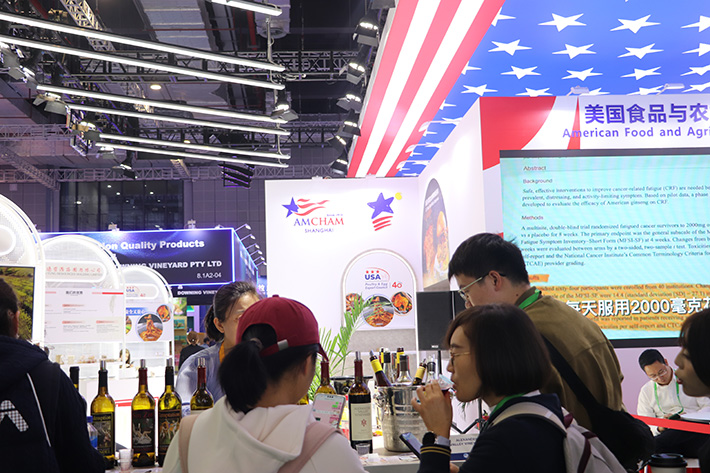
Founded 110 years ago, the American Chamber of Commerce in Shanghai (AmCham Shanghai) has long been hailed as “the voice of American businesses in China.” At this year’s CIIE, the chamber partnered with the US Department of Agriculture to host the American Food and Agriculture Pavilion for the third consecutive time. Featuring 19 exhibitors, it represented the largest US agricultural and food presence at the expo.
Eric Zheng, president of AmCham Shanghai, believes agricultural trade is vital to both countries. “The US is one of the largest exporters of agricultural products, and China is one of the largest importers of agricultural products, such as soybeans. So, they’re very complementary to each other,” he said.
Many US businesses at the expo expressed their confidence in the Chinese market. Christopher Beros, director of Greater China and Southeast Asia at the California Wine Institute, said his organisation remains deeply committed to China. “CIIE is a very important platform for branding, for showing people that California wines are committed to the Chinese market,” he said.
Beros noted that many member wineries see China as a vital and fast-growing market with huge potential, as local consumers are increasingly exploring fine wines. He added that the rise of high-quality Chinese wines is a positive development that will “expand the number of consumers who want to drink fine wine,” benefitting the entire category rather than creating competition.
For Swedish home furnishing giant IKEA, the CIIE is a place not only to launch new products, but also to deepen its connection with Chinese consumers and strengthen cooperation with local partners.
Aleksey Efremov, senior vice president of IKEA China, said that the company operates an integrated ecosystem encompassing production, product development, and retail, laying a solid foundation for future growth under China’s open economy. “With China’s openness, we are happy to have a full-scale value chain here,” he said.
Catering to an evolving market
Exhibitors targeted new opportunities arising from emerging trends in the Chinese market, such as the burgeoning silver economy, the growing focus on weight management and broader health concerns, and the expanding pet economy. For these companies, doing business means more than simply bringing products from other markets into China - it requires tailoring them to the evolving needs of Chinese consumers.
IKEA has responded to China’s renewed interest in traditional culture by integrating Chinese elements into its furniture design. In 2024, the global debut of IKEA’s FÖSSTA series - celebrating the Year of the Snake - received an enthusiastic response, with total sales reaching 400,000 pieces. Building on this success, the company is unveiling its new FÖSSTA collection for the upcoming 2026 Year of the Horse at this year’s CIIE. Developed in collaboration with folk culture experts and intangible cultural heritage inheritors from Xi’an, the collection features creative designs inspired by the spirit and symbolism of the horse.
China’s green transition is also generating new momentum for its sustainable operations. Since its debut at last year’s CIIE, IKEA’s BuyBack and Resell programme has collected nearly 3,500 pieces of furniture from consumers in the fiscal year 2025, including wardrobes, bed frames, and sofas. With a resale rate as high as 91 percent, the initiative exemplifies how IKEA and Chinese consumers are jointly embracing circular living.
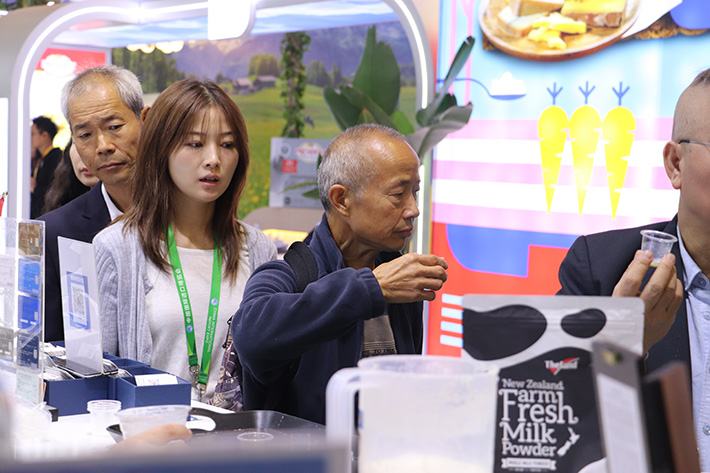
For Roy Van Den Hurk, CEO of Milk New Zealand Dairy Ltd., which owns Theland milk brand, understanding the Chinese market and tailoring products accordingly is key to the company’s success. A regular participant at the CIIE, he has gained deep insight into consumer preferences.
“New Zealand consumers tend to prioritise factors like low fat, whereas in the Chinese market the focus is on higher protein,” he said. This year, the company debuted Omega-3, a premium grass-fed milk with a high protein content.
To meet the needs of a growing older population, it also introduced two new products: one containing colostrum to help to enhance immunity and support disease resistance, and the other with high calcium content to support bone health. Recognising the rising influence of e-commerce, the company set up a livestreaming studio at its booth with local partners and invited Dong Yuhui, a well-known livestreamer, to introduce its products.
“We need to make sure that all of the development and the things we are doing as a company actually meet consumer requirements, because if we do not meet those needs, we will not be in business,” he said.
An empowering ‘gym’
The significance of the Chinese market goes beyond being a profitable destination for products and services. For exhibitors, especially industry leaders that rely on innovation, China has become a birthplace and testing ground for new ideas, thanks to the market’s vitality and diversity. A strong presence in China is not only profitable but also essential for maintaining global competitiveness.
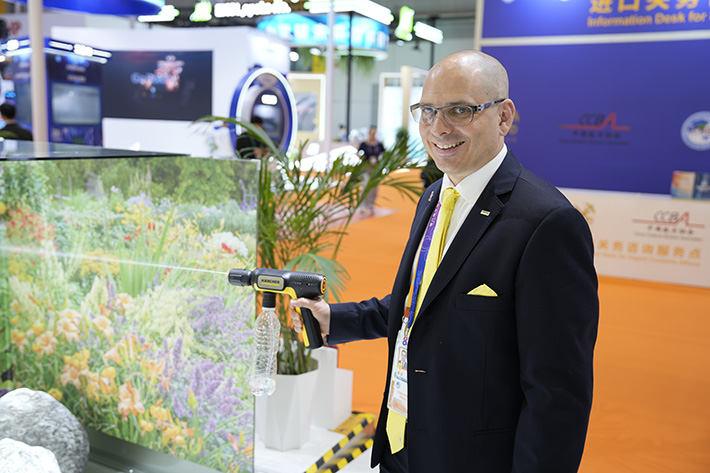
German cleaning technology pioneer Kärcher provides a clear example. At this year’s expo, the company unveiled seven new smart cleaning products, illustrating how the Chinese market drives innovation.
“China’s fast-paced market and tech-savvy consumers create an ideal environment for innovation,” said Rainer Kern, vice president of the Kärcher Group and CFO of Kärcher China.
This dynamic ecosystem allows Kärcher to develop and test new product features quickly, turning ideas into reality faster than in many other markets. According to Kern, this agility gives the company a competitive edge in launching and refining products that meet the evolving demands of Chinese consumers.
Zhang Xiaoyu, president of Arkema Greater China, a French specialty materials leader, echoed Kern’s observations. Although this is Arkema’s first appearance at the CIIE, the company has operated in China for over 40 years, running nine production bases and two research centres with around 2,600 employees.
Zhang noted that China’s market is unique in its size and diversity of use cases, providing rapid feedback that allows new technologies and products to scale and commercialise quickly, especially in solar power, wind power, batteries, electric vehicles, shipbuilding, and data centres. This has made Arkema’s Chinese operations central to its innovation strategy.
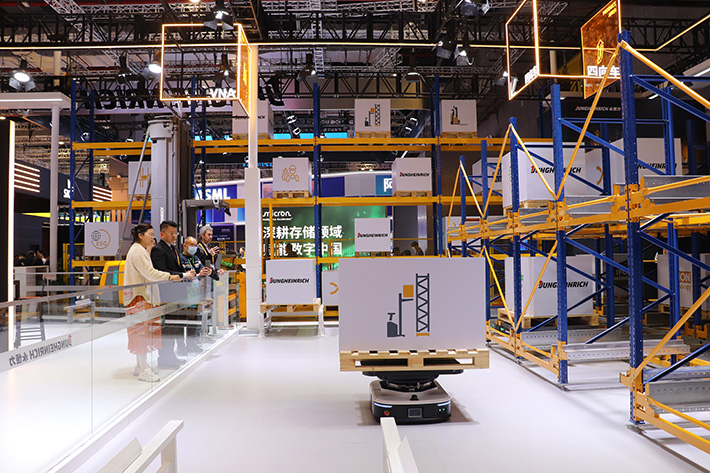
Bai Daping, general manager of Jungheinrich China, described the Chinese market as the “gym” of the global market. “To build a global competitive edge, a company must first strengthen itself and succeed in the Chinese market,” he said.
Participating in the CIIE for the eighth time, the German internal logistics company has steadily deepened its focus on China. Starting with sales through agents, it now operates factories and a software centre that integrate China’s advancements in digitalisation, including AI, into its solutions.
“In terms of internal logistics, China used to learn from the West; now it is leading the innovation in the sector,” Bai said. “Our localisation efforts in China aim not only at meeting the needs here, but also at improving the company’s competitiveness globally.”
