
Growing a Rural Future
In the lush heart of Uganda’s Busoga sub-region, Isaac Imaka is charting a new course for rural development. After seven years in national media, he left the newsroom and stepped into the soil. The former reporter with the Daily Monitor was driven by the belief that communities like his in Jinja North deserved more than chronic poverty and hand-to-mouth survival.
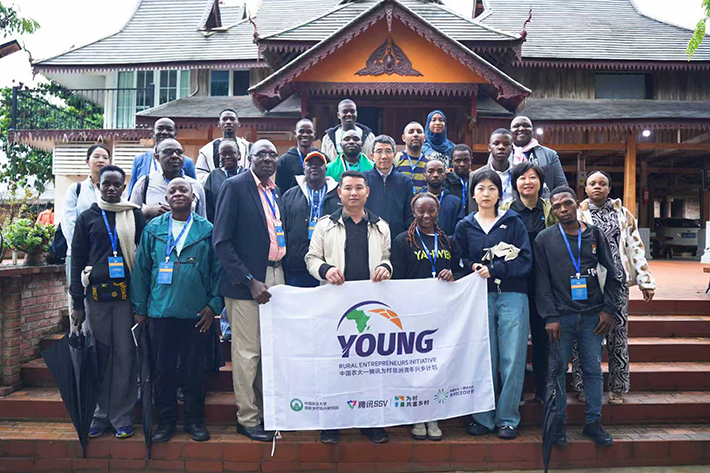
His transformation came after attending the Young Rural Entrepreneurs Initiative, a collaborative programme between China Agricultural University (CAU) and Tencent. In November 2024, he embarked on a 10-day educational trip across China, immersing himself in innovative farming techniques, community-driven enterprises, and the powerful synergy of science and local ingenuity. What he brought back was not just knowledge but a vision for change.
Lessons from model villages
During the tour, two villages in Yunnan Province, Mangajian and Hebian, proved to be turning points in Imaka’s thinking. Barely two decades ago, both were counted among China’s poorest communities. Today, they stand as thriving exemplars of rural transformation, drawing scholars and visitors eager to witness firsthand the strategies that have revitalised these once-struggling villages.
Mangajian had transformed itself by adopting climate-resilient farming, enhanced soil management, water conservation, and sustainable practices that steadily increased yields. For Imaka, the contrast with his homeland was striking. Along the Nile, farmers still face chronic vegetable shortages, hampered not by a lack of water but by the absence of organised irrigation systems.
Hebian Village impressed him even more. Once dependent solely on traditional agriculture and livestock, the villagers embraced crop diversification by planting rice, corn, and new vegetables suited to its tropical climate, and simultaneously improved its infrastructure. Eco-friendly houses replaced wooden shacks, while villagers organised community-run homestays to escape crippling debt cycles. What truly struck Imaka was the collective mindset. Villagers agreed that development must be shared, and success must belong to everyone, not a privileged few.
“The people were hungry for change and growth,” Hebian Village Chief Deng Linguo told the participants of the CAU-Tencent programme, which was the exact opposite of what Imaka described as entrenched individualism and short-termism in rural Busoga, where most community groups focus on funerals, borrowing schemes, and survival rather than on production and transformation.
Using media for mobilisation
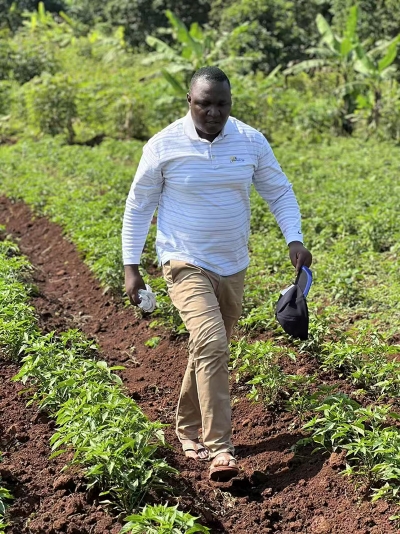
Back in Uganda, Imaka immediately recognised the potential of China-Uganda cooperation in farming, which ensures a minimum purchase price of 3,000 Ugandan shillings ($0.83) per kg of chili. With $1,066 in start-up capital and ongoing guidance online from Professor Xu Jin of CAU, he established a demonstration chili farm.
The budget for the farm involved a total expenditure of $723, with $223 spent on seeds, accounting for 21 percent of the outlay, $100 on pesticides, and $400 on labour, which covered the wages of two full-time workers. “If the climate holds, we expect a yield of 2,400 kg of chili and a profit of around $2,057,” Imaka explained.
But his ambitions go far beyond personal gain: “If I succeed this year, a hundred households will join next year. That is my real gain.”
Drawing on his journalism experience, Imaka mobilises his community through Busoga Today, the newspaper he founded after leaving Daily Monitor. Available in both digital and print formats, the publication shares practical agricultural techniques, Chinese rural success stories, and updates on the achievements of local farmers.
He also organises “fireplace dialogues,” open-air community discussions where villagers debate development strategies, revisit their assumptions about poverty, and explore whether Busoga can adopt a “one village, one product” model similar to Chinese rural communities.
In his public writings, Imaka has been outspoken about the need to break Busoga’s entrenched cycle of individualism, unproductive savings groups, and a culture that prioritises preparing for funerals over investing in productive ventures. He contrasts this sharply with Hebian and Mangajian, where communities have embraced organised leadership, cooperatives, and long-term planning.
“How can able-bodied 20-year-olds focus on how to bury themselves, instead of how to increase their productivity?” he asked in one of his essays, urging Busoga’s youth to pursue value-added agriculture and collective development.
Towards a bigger dream
Imaka’s chili farm is only the beginning. His long-term ambition is to establish a chili processing plant, enabling local farmers to join value chains instead of selling raw produce. More jobs, higher margins and a flagship local product - these are the pillars of the transformation he envisions.
His mission has also led him into public service. Imaka is running for a parliamentary seat in Jinja North constituency, hoping to use policymaking to expand rural entrepreneurship, youth empowerment and agricultural modernisation. “I want to help young people to access opportunities I never had. I want to build a society that meets their needs,” he told ChinAfrica confidently.
From a journalist documenting stories to an entrepreneur crafting a new chapter for his community, Imaka embodies the power of cross-cultural learning. The lessons he learned in Yunnan’s model villages - cooperation, intentional planning, climate-smart agriculture, and the “one village, one product” approach - are now helping to shape the future of Busoga.
