
Green Field Revival
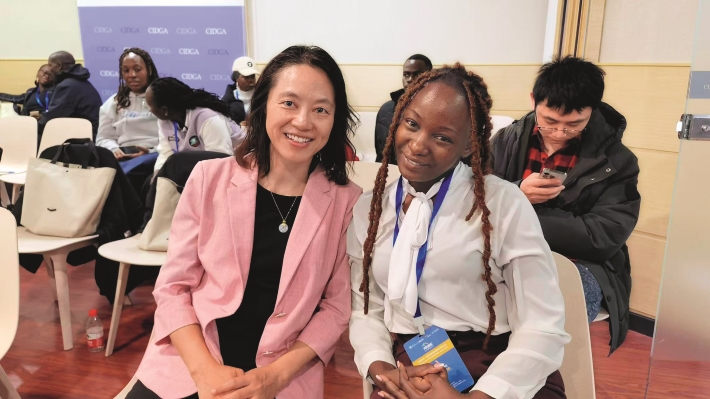

A 2-acre (0.8 hectare) organic farm in east Uganda is emerging as an unlikely testing ground for climate-resilient agriculture, youth entrepreneurship and South-South knowledge exchange. The project is led by Nabirye Sarah, a young Ugandan journalist turned entrepreneur whose training through a China-Africa cooperation programme has enabled her to blend Chinese agricultural expertise with local realities. Her work offers a glimpse into how sustainable farming models can take root far beyond their place of origin.
Raised in Uganda’s Busoga region, where farming shaped everyday life but rarely guaranteed long-term prosperity, Sarah developed an early awareness of the challenges facing smallholder farmers. After earning a bachelor’s degree in Journalism and Mass Communication from Kampala International University in 2023, she worked as a media manager at the Busoga Consortium for Development. The role deepened her concern that rural communities continued to lack access to modern agricultural knowledge, reliable market information and practical training opportunities.
Seeking to bridge that gap, Sarah joined the Young African Rural Entrepreneurs Initiative in late 2024, a joint programme run by China Agricultural University and Internet company Tencent that supports African youth in applying skills learned in China to local development challenges. Through training at the university and mentorship from Professor Qi Gubo, she began shifting from reporting on rural issues to actively participating in rural transformation.
Beyond technical exposure, the programme provided a structured framework for turning ideas into viable projects. With guidance from her mentor, Sarah decided to establish an organic farm in her home region, positioning it not only as a production base, but also as a learning platform for surrounding communities.
Organic farming as an alternative
Uganda’s fertile soils and favourable climate give it strong agricultural potential, yet conventional farming methods relying heavily on chemical inputs have contributed to soil degradation and limited access to premium markets. Sarah’s project responds to these challenges through organic production and adaptive infrastructure inspired by Chinese agricultural practices.
On her farm, she introduced organic cultivation standards learned in China, selected crop varieties suited to local conditions, and invested in irrigation and basic access roads. Taking into account Uganda’s distinct rainy seasons, she modified irrigation systems to include adjustable drainage and rainwater storage. This approach allows excess water to be released during heavy rains while conserving supplies for drier periods, improving water-use efficiency and production stability.
Before scaling up, Sarah conducted market research that revealed strong demand for organic produce in major Ugandan cities, supported by government policies promoting green agriculture. She has begun building partnerships with local supermarkets and distributors and is exploring international organic markets. To meet diverse market needs, she plans differentiated packaging and product combinations.
The farm currently focuses on chilli and soybean cultivation, alongside emerging agritourism activities. Visitors can take part in farming experiences while learning about sustainable practices, creating an additional income stream beyond crop sales.
Driving expansion
Mentorship has played a decisive role throughout the project. Qi provided continuous guidance, from early project design to implementation. In the initial phase, she advised Sarah to narrow her geographic focus and deepen needs assessments, proposing development themes ranging from organic composting to digital marketing. This helped Sarah to identify a realistic development path rooted in Busoga’s conditions.
Field visits in China further shaped the project. Observations of villages such as Hebian Village in Yunnan Province, where agriculture and rural tourism are closely integrated, inspired a hybrid model combining technology demonstration with experiential tourism. Sarah has adapted this approach by incorporating Ugandan cultural elements, including traditional tools and local food workshops.
As the project moved forward, the business plan was translated into measurable targets, including a 30-percent reduction in crop losses and online training for at least 200 farmers. To address digital literacy barriers, Sarah is producing short training videos in Luganda, drawing on her media background to make complex techniques accessible.
Beyond commercial goals, the project carries a broader social mission. Sarah encourages young people, especially women, to view agriculture not as a last resort but as a modern, innovative and dignified profession. Through workshops, peer exchanges and storytelling, she hopes to reshape perceptions of farming while spreading practical skills across the community.
“Inspiration from China has become my personal mission,” she wrote in her programme reflections. Today, her organic farm stands as more than a business venture. It is a living example of how tailored technology transfer, sustained mentorship and youth leadership can strengthen resilience, opportunity and confidence in rural Africa.
