
Cultivating a New Countryside
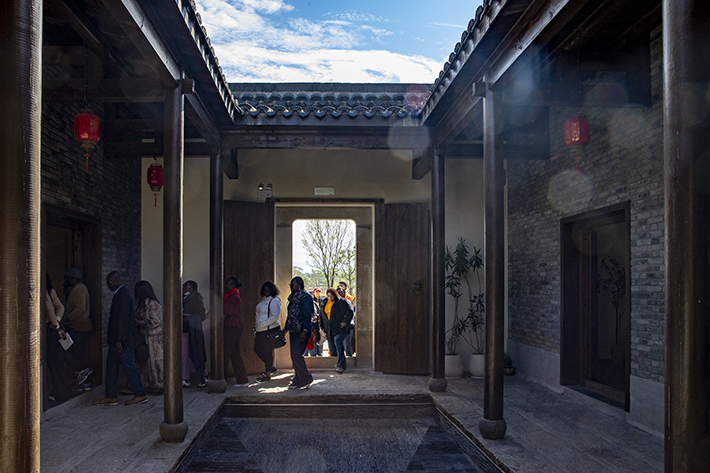
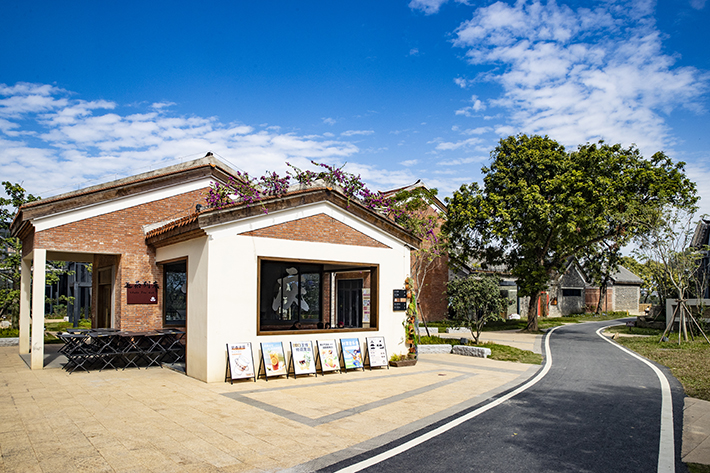
At dawn in Wufu Village, in Dinghu District of Zhaoqing City, Guangdong Province, the newly restored Chaoyangli Cultural Retreat is already welcoming its first visitors. A visitor surnamed Chen, who has travelled from Guangzhou with his child, stops in front of the Chaxi Academy to admire local intangible cultural heritage crafts. In the small square at the heart of the village, barista Liu Haoxian is preparing coffee for customers at a café that has quickly become a popular check-in spot under blue skies and white clouds.
Hundreds of kilometres away, in Xinxing County of Yunfu City, contracted farmers working with the Wens Group Research Institute are using smart systems to clean and monitor their poultry farms.
These scenes, appearing worlds apart, tell a single story. They are two sides of how China’s rural revitalisation strategy is unfolding in Guangdong Province.
On one side, leading agribusiness Wens Group is using a “company + farmer” digital farming model to help tens of thousands of rural households to move towards common prosperity. On the other, the Chaoyangli project is using culture, creativity, and whole-village revitalisation to transform an underused rural settlement into a shared urban-rural lifestyle destination.
What emerges is a picture of rural revitalisation that is not just about “getting rich,” but about enriching life in every sense.
A digital agriculture revolution
The “company + farmer” model is one of the most important innovations developed from China’s poverty alleviation and rural development policies, and Wens Group has become a national example of how it works.
“The company provides chicks, feed, technology and unified management standards, while farmers take charge of the daily work,” explained Ning Jun, director of the Comprehensive Office at the Wens Group Research Institute. At its core, the model builds a close, long-term partnership that links the interests of enterprises and farmers.
Farmer Yu Zanwen is from one of nearly 50,000 households working with Wens. “I came here with just my clothes, quilts and cooking tools,” he said. He now rents three poultry sheds in a local farming cluster, raising up to 90,000 chickens per batch with considerable profit. Thanks to the model, the combined annual income of all participating farmers reaches about 10 billion yuan ($1.4 billion) with an average of more than 200,000 yuan ($28,000) per household.
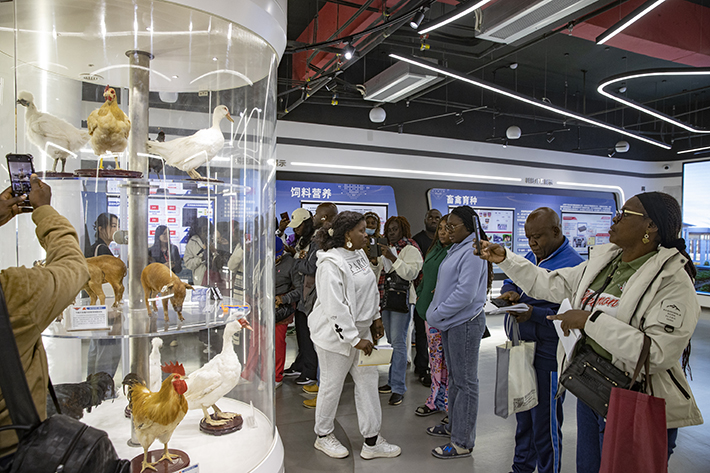
Unlike traditional agricultural practices based largely on experience, Wens Group has introduced digital management throughout the farming process. In the research institute’s command centre, a giant smart screen displays real-time conditions at farms located in different places. Ning said the company focuses on two major research areas, livestock and poultry, to tackle key scientific and technical bottlenecks in the industry.
Reimagining rural value
With material well-being steadily improving, Guangdong is now pushing rural revitalisation towards a richer cultural and social life. The Chaoyangli project exemplifies this shift.
Developed in Wufu Village in Yong’an Township, Zhaoqing City’s Dinghu District, the project is a comprehensive rural cultural and tourism complex. Covering more than 41 hectares with a total built-up area of 4,900 square metres, the entire process from planning to operation took just over half a year. Today it attracts 1,000 to 2,000 visitors on weekdays and up to 5,000 on weekends, mostly residents and company staff from nearby urban areas.
Its innovative “two-courtyard economy” combines spaces for enterprises with shared courtyards for villagers. Retaining traditional Hakka architectural features such as curved eaves and red and blue walls, the project introduces public cultural spaces, creative shops, speciality restaurants and shared homestays.
One of its highlights is the Wufu Café, a social-media favourite. “We’ve only been open for less than two months, but business is good. We sell 100 to 200 cups a day,” said barista Liu. The small square in front often hosts concerts and intangible heritage performances for both tourists and villagers. Liu, once employed at a Japanese restaurant, returned to the countryside because he was drawn by the project’s vitality.
Chaoyangli has become one of the signature sites for Guangdong’s “High-Quality Development Programme for Hundred Counties, Thousand Towns and Ten Thousand Villages,” also known as the Baiqianwan Programme, the province’s core strategy since 2022 to promote coordinated urban-rural development and reduce regional disparities.
By integrating agriculture, culture and tourism, the programme has created a composite development model. It preserves historical trees and traditional buildings, upgrades neglected spaces and adds features such as a rooftop viewing corridor under ancient trees that offers a panoramic view of the village. The result is a place where tradition and modernity coexist, showcasing how rural revitalisation can be both authentic and innovative.
As the programme’s operations manager put it, revitalising the countryside is not just about food and clothing; it is about ensuring that rural residents enjoy the same cultural life as those in the cities.
Twin engines of transformation
Guangdong’s rural revitalisation owes its success to systemic innovation and a diversified set of approaches.
At the industrial level, the province has developed a “government + finance + enterprise + village” model, integrating the strengths of authorities, financial institutions, leading companies and local communities. Through this mechanism, Wens Group has helped hundreds of thousands of farmers nationwide to increase their incomes.
At the village level, Guangdong is promoting whole-village operation, transforming hollowed-out villages by combining tourism, business services and cultural industries.
The Wens Group model addresses the income and productivity challenges, while the Chaoyangli model redefines the cultural and social value of the countryside. They are helping rural communities to evolve from single-function agricultural zones into multi-dimensional modern communities that integrate production, living and ecology.
Guangdong’s experience shows that rural revitalisation is a comprehensive transformation, from material abundance to cultural enrichment. When villagers not only have secure housing and access to education, but can also enjoy high-quality cultural experiences, the countryside becomes a place truly worth returning to, as well as worth staying in.
This transformation continues. As more firms like Wens Group and more projects like Chaoyangli emerge, the story of China’s rural revitalisation will only grow richer and more compelling.
