
Chilli Market Heats Up
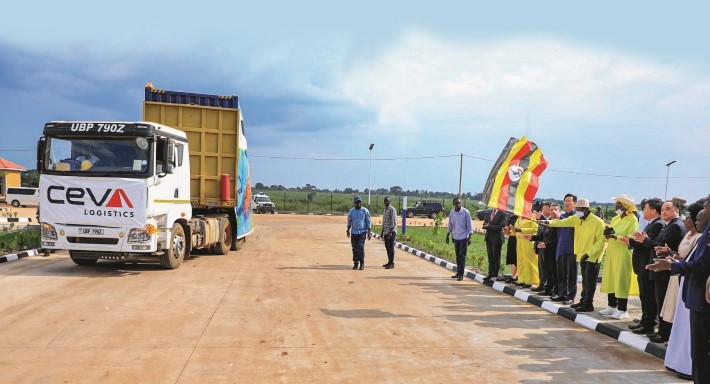
After securing a market for their dried red chilli peppers in China, elated farmers in Uganda are expanding the spicy crop cultivation to thousands of acres.
China’s increasing appetite for international cuisine and spices has created a most welcome demand for high-quality chillies. And given Uganda’s unique climate and soil conditions that allow for diverse chilli varieties, the East African country has a competitive edge. This has led to Uganda and China now having trade agreements in place, facilitating exports.
The chilli growing in Uganda is supported by the governments of China and Uganda, built on the success of the South-South Cooperation project between the two countries and supported by the Food and Agriculture Organisation of the United Nations (FAO). The project has yielded impressive results, including a quadrupling of rice production per hectare and increased milk production.
On 20 November 2025, a ceremony was held in the eastern district of Kamuli, where Ugandan President Yoweri Museveni flagged off the first consignment of 11 tonnes of dried chilli to China.
“Many farmers got involved in growing chillies and have already delivered their products to collection points where they were paid for their crop. From these points, the chillies were ferried to regional stores where they were placed in containers [for export],” said Daniel Kasolo, one of the coordinators of chilli farmers in Uganda.
Heading up the initiative is the eastern Uganda regional development programme spearheaded by the Busoga Consortium for Development (BCD), based in Busoga Kingdom.
“The first chilli export container leaving Busoga for China is a turning point. We are finally tapping into the global market with our own high-value produce,” said Anthony Mula, director general of BCD.
Rebecca Kadaga, Uganda’s first deputy prime minister, told ChinAfrica that “Ugandan chillies, renowned for intense flavour and aroma, have been gaining popularity globally, and China presents a lucrative market. We have fertile soil and a favourable climate, which enables our farmers to grow chillies.”
Launching Uganda chilli protocol
Although chilli growing began around late March 2025 in some places, the chilli initiative was officially launched by Kadaga on behalf of the vice president Jessica Alupo on 7 May.
“We are delighted to launch chilli growing in Busoga sub-region and Uganda at large. This milestone is a direct result of the Chilli Protocol signed between Uganda and China in September 2024,” said Kadaga, adding that Chinese experts estimated that a single farmer in Uganda can earn over 15 million Ugandan Shillings (about $4,620) from one acre of chillies in a year.
“The guaranteed price policy per season negotiated by the BCD is a great move, and I encourage other players in the agricultural sector to adopt similar approaches,” said Kadaga.
She said the chilli initiative is part of the 957-acre (387 hectares) China-Uganda Agriculture Cooperation Industrial Park, established in 2016, which features multiple functional areas for crop cultivation, livestock breeding, and product processing.
Zhang Kehong of the Kehong Group from China, which is to import most of the chillies, said, “A development model has been adopted, where the company [Kehong] provides premium varieties of chilli and professional technical services, and implements a guaranteed price purchase policy.”
Zhang said that the project plans to promote chilli planting in over 100,000 acres (40,468.56 hectares) in the Busoga, Kamuli and Luwero along with other areas, with an expected annual collection and purchase of over 220,000 tonnes of dried chilli peppers. The project is expected to generate an annual export value of $300 million.
At the launch event, Mula hailed the partnership between BCD and China’s Kehong Group for ensuring guaranteed prices and markets for local farmers.
Meanwhile, BCD spokesperson Sam Mwesigwa told ChinAfrica that Chinese businessmen and investors from Liaoning Province in northeast China have recently visited Uganda’s Busoga Kingdom, signing agreements under the guidance of the Ugandan government, opening a market for Ugandans to export food crops including chillies and soybeans.
Mwesigwa said that they have embarked on mobilising farmers to grow chillies. “A massive chilli growing programme was officially launched by Vice President Alupo represented by First Deputy Prime Minister Kadaga at a 40-acre (16.19 hectares) demonstration farm in Kamuli District [on 7 May]. The Chinese investors who pledged to buy all the chillies grown in Busoga provided the seeds of the particular chilli variety that is popular and in high demand in China.”
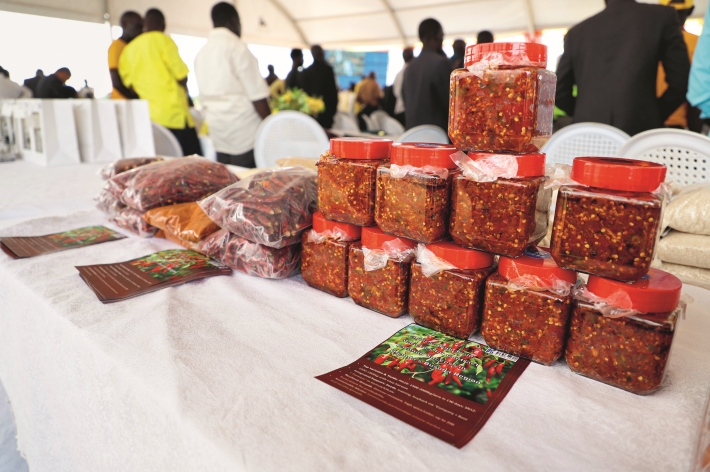
Benefitting from chilli exports to China
After growing thousands of acres in the past few months, many tonnes of chillies have been harvested and dried.
“The first container of chilli bound for China is proof that Busoga’s journey towards global markets has already begun,” said Mula.
He said they have a vision of developing 1 million chilli farmers in the Busoga, each planting just 1 acre, projecting that the region could then generate an unprecedented wave of income, and lift thousands of households out of poverty.
An upbeat BCD Regional Coordinator Paul Mpaulo told ChinAfrica that the first shipment of chillies is more than an export win, but a statement that Busoga is ready to lead in agribusiness.
The export of chillies to China is expected to generate significant revenue for Uganda’s economy. The increased demand is likely to lead to higher selling prices for farmers, improving their livelihoods and encouraging more people to venture into chilli farming.
“As Uganda’s chillies make their way to China, it marks the beginning of a new era in trade relations between the two countries. The success of this venture could pave the way for other Ugandan products to enter the Chinese market, further diversifying the country’s exports,” said Alupo.
Abdul Kasata, a chilli farmer in Kamuli District, said he is a happy man as he is now receiving a good income from his 2 acres (0.8 hectares) of chilli crops. “I thank the Chinese government for supporting the chilli project,” he said.
