
Bilateral Trade Gets a Boost
Stanbic Bank Zimbabwe is strategically positioning itself as a critical bridge for Zimbabwe’s local businesses, seeking to navigate the vast and complex Chinese market.
The initiative leverages the bank’s unique partnerships and deep expertise to guide Zimbabwean companies through the intricacies of importing from and exporting to China, and is in response to the growing economic ties between Zimbabwe and China.
Preparing exporters
According to Tapuwa Nyika, head of trade and Africa-China banking at Stanbic Bank Zimbabwe, the bank’s role is to actively prepare local enterprises for this opportunity.
“Our focus is to ensure our local companies are export ready and can competitively access the Chinese market,” said Nyika.
The bank’s vision, however, extends beyond just exports.
“We also assist Zimbabwean companies in importing essential goods from China, such as raw materials for production and machinery, which is critical for enhancing their operational efficiency and capacity,” Nyika added.
For ease of operation, the bank has introduced Africa-China Agent Proposition, a specialised suite of services designed to dismantle the common barriers African businesses face.
The challenges include language differences, difficulties in sourcing reliable suppliers, complex import regulations, and the inherent risks of international payments.
In addition, the bank said it offers a platform to connect clients with credible partners, logistical and linguistic support to smooth the journey from travel to shipping, and financial expertise including trade financing and price negotiation to secure favourable terms for its clients.
An e-book, titled Beginner’s Guide to Importing from China launched to provide Zimbabwean businesspeople with information to navigate new sourcing opportunities, streamline import processes, enhance competitiveness, and boost their trade with China was also launched by the bank, according to Nyika.
He noted that the recent signing of a blueberry export protocol between China and Zimbabwe is a clear indication of the momentum shift in trade between the two countries.
Assisting SMEs and health sector
Meanwhile, the Zimbabwean government is actively seeking to increase access for its small and medium-sized enterprises (SMEs) to the Chinese market.
Monica Mutsvangwa, minister of women affairs, community, small and medium enterprises development, applauded the bank’s initiative, saying the country is always looking for ways to maximise trade with China.
“We are actively seeking to increase access for our SMEs to the Chinese market, which we believe will be a catalyst for their growth into globally competitive enterprises,” said Mutsvangwa.
Answering media questions at the SME International Expo in the country’s capital Harare in mid-November 2025, Mutsvangwa said that Chinese market can provide momentum to propel SMEs into globally competitive enterprises through market access and industry partnerships.
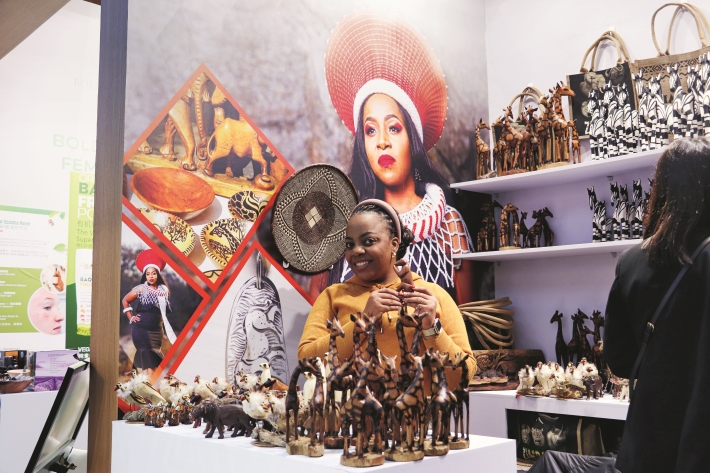
Mutsangwa told Xinhua that locally produced heritage products and cultural artefacts, such as indigenous stone and wood artwork, can be exported to China, further elevating the export portfolios of local SMEs.
“When it comes to indigenous products, we have very good [such] products which Chinese consumers really love, especially artefacts,” she said. “What we do produce is organic, and it is what the Chinese are very much interested in.”
She further noted that Zimbabwe had made full use of the opportunity to assist its businesses at the China International Import Expo in Shanghai in November 2025.
With the bank saying it is building a long-term framework for sustainable trade, Nyika said he was confident of the outlook.
“We are very optimistic about the Chinese market, and local companies are also looking forward to exporting. There are a lot of opportunities for growth for Africa and China,” he said.
Prominent Zimbabwean medical practitioner Mlungusi Ndebele, who was part of a medical tour organised by the bank to China in late October 2025, was impressed with the advancement of Chinese hospitals.
He said the future of Zimbabwean health care lies in adopting the integrated, high-tech approach he witnessed abroad.
His journey, which took him through major hospitals and research centres, left him deeply impressed on China’s ability to seamlessly blend ancient medical wisdom with cutting-edge technological advancement.
Ndebele was particularly struck by the efficiency of the digital health infrastructure.
He recounted seeing doctors in Shanghai access comprehensive patient records, including all imaging and lab results, instantly.
Beyond the digital realm, the physician observed sophisticated robotic surgery being performed.
He recognised that while the investment in such technology is substantial, the benefits in terms of patient outcomes - specifically reduced recovery times and increased surgical precision - are invaluable. He is now advocating for increased exposure and training in minimally invasive techniques for Zimbabwean surgeons.
“The strategic adoption of artificial intelligence for diagnostics, especially in areas like retinal scans for diabetes and analysis of CT scans, offers a powerful way to support overstretched health care professionals in rural areas of Zimbabwe,” Ndebele said.
He was also fascinated by institutional recognition and integration of traditional Chinese medicine.
“I saw dedicated hospital departments where acupuncture and herbal therapies were used alongside conventional treatments, not as an alternative, but as an officially sanctioned part of holistic care,” he told ChinAfrica. “This provides a vital framework for Zimbabwe to formally research and integrate its own rich traditional healing practices into the national health system.”
Sarah Chirangwa, Stanbic Bank’s head of public sector banking who accompanied the recent Zimbabwe trade delegation to China, said the bank will continue to take different groups of professionals to explore and learn from the Chinese market.
“The trade mission was an eye-opening experience for our delegates from the health sector. They engaged with leading Chinese medical firms and returned with invaluable insights into digital health systems and modern hospital management models,” said Chirangwa.
