
An Inspiring Path

Far from being mere rhetoric or abstract theory, Chinese-style modernisation is a concrete reality best grasped through direct experience.
Before arriving in China, my knowledge of Chinese modernisation was based mainly on reading, classroom education, and accounts from colleagues who had already travelled around the country. Based on that, I thought it was a planned modernisation based on technology and large-scale infrastructure.
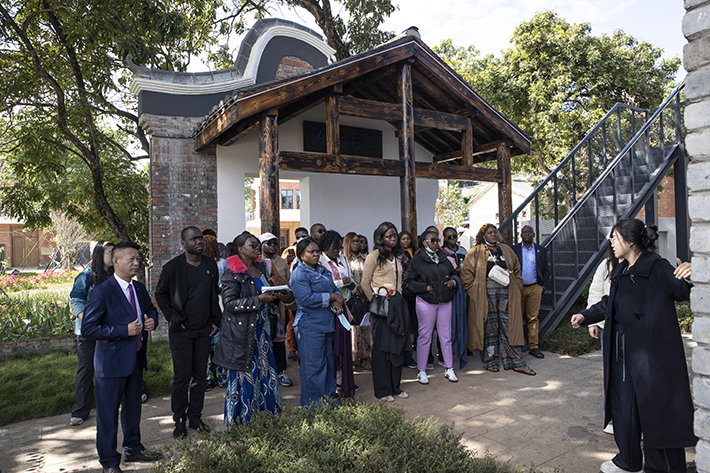
However, one moment during our trip profoundly reshaped my perspective: the visit to the model village development project of Chaoyangli in the city of Zhaoqing, Guangdong Province, which is part of the High-Quality Development Programme for Hundred Counties, Thousand Towns and Ten Thousand Villages. This development initiative is central to Guangdong’s strategy to advance coordinated urban-rural development. There, I saw a form of modernisation not imposed from above, but co-created with local residents and grounded in respect for natural resources and local identity.
This once ordinary village is now a vibrant space where rural culture meets ecotourism, and the old blends with the new. At that moment, I realised that Chinese modernisation is not merely an economic strategy; it is also a social and human philosophy.
Concrete and transferable approaches
After observing industrial upgrading, renewable energy, rural revitalisation and ecological initiatives, several elements stand out as particularly relevant to the Republic of the Congo. The Chinese experience shows that rural revitalisation can be adapted to different contexts. The Republic of the Congo has immense natural assets, including lush forests, rivers, living traditions and distinctive landscapes, yet many of its rural areas remain undervalued.
Guangdong shows that the rural economy can be revitalised without eroding local culture by emphasising ecotourism, living traditions, modern agriculture, valued crafts, and public-private partnerships. This approach could be readily applied in Pool, Likouala, Sangha, or Kouilou, where natural and cultural resources remain largely untapped.
Traditional industries must be upgraded and modernised without losing their roots. Guangdong demonstrates that it is possible to modernise an industry while preserving its heritage, particularly in manufacturing. There, industries have successfully evolved from traditional artisanal or manufacturing models to high value-added production through technological innovation, contemporary design, digital management and enhanced quality standards. This transformation does not erase cultural heritage; it strengthens it.
The Republic of the Congo can apply the same approach to wood processing, artisanal fishing, pottery, local textiles, agriculture and food. Modernisation means improving quality, increasing added value and safeguarding expertise.
China demonstrates a deep ecological awareness. Guangdong advances development in ways that respect and integrate the natural environment. The province shows how a densely urbanised area can still preserve its rivers, restore its wetlands, protect its forests, and transform abandoned industrial spaces into ecological parks. This approach places the environment at the centre of development, showing that ecology can support the economy rather than obstruct it.
In a country like the Republic of the Congo where ecosystems are still preserved, Guangdong’s experience offers inspiration for implementing clean energy, advanced waste management and sustainable urbanisation from the start.
Potential and challenges
I was particularly impressed by the collaborative rural revitalisation model, where local government, experts, businesses and residents work together.
Development opportunities for the Republic of the Congo include the establishment of ecotourism villages with light infrastructure. This could boost tourism at lower cost while making rural areas more attractive. Rural production hubs can be created by focusing on modern agriculture and improved livestock farming practices. Traditional crafts can become a significant growth driver, and young people should be encouraged to launch businesses in their own villages to revitalise rural communities.
Naturally, any change brings challenges. At the local government level, transparency, sound management and genuine community participation are essential. Equally important is training those involved in implementing change: without the necessary skills, technology alone cannot drive transformation.
It is also clear that, in terms of financing, revitalisation requires an initial investment and a shift in how young people perceive rural areas. By making these areas more attractive and highlighting their potential, young people will be more likely to engage. This model is achievable for the Republic of the Congo, but it demands commitment, consistency, and strong partnerships.
Strengthening cooperation
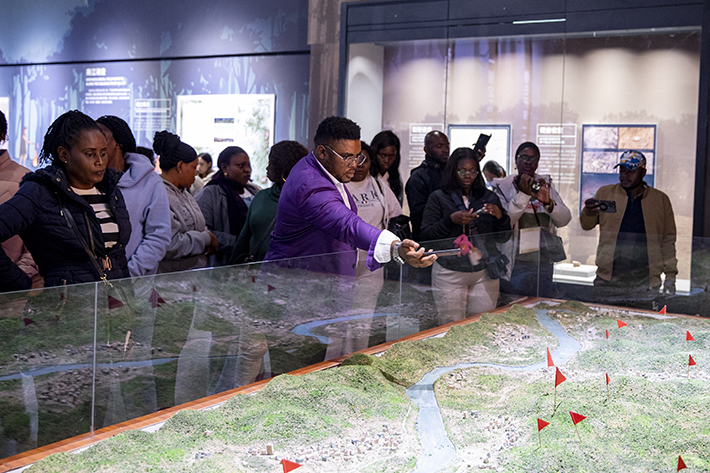
Based on this trip, several areas stand out as priorities for cooperation: digital technology and e-governance, smart agriculture, university and professional exchanges, and all aspects of green energy. China has extensive expertise in public service platforms, civic artificial intelligence, data management and digital infrastructure. The Republic of the Congo could greatly benefit from modernising its administrative services by drawing on this knowledge. Modernising agriculture is equally urgent. Chinese technologies, such as smart irrigation, agricultural drones, advanced greenhouses and resilient seed varieties, could substantially boost local food production.
In education, Chinese universities could become key partners in training young people, particularly in engineering, communication, environmental sciences, and technology.
Regarding the environment, eco-friendly roads, modern urban parks, solar or hydrogen facilities and electric transport are all possibilities that could lead the Republic of the Congo into an era of sustainable development.
As a journalist and media professional, I am convinced that we have a vital role to play in shaping Sino-Congolese relations. The media must cover China without resorting to caricature, highlight the human stories behind the projects, present real opportunities for cooperation, address misconceptions, and contextualise both successes and challenges. Above all, we must act as cultural intermediaries. On my return, I will share the story of Guangdong through reports, interviews, videos, analytical articles, and human-interest features, aiming to give Congolese audiences a nuanced, pragmatic understanding of this model.
This trip was more than a study visit; it was a revelation of what Chinese modernisation truly entails: a deeply human approach, respectful of identities, rigorously planned, and forward-looking. China does not offer a model to be copied, but a source of inspiration to be interpreted. In the Republic of the Congo, it is up to us to distil the essence, adapt the lessons, and use them as levers for national transformation.
By le Prince Elidad Mode Elenga
The author is journalist from Radio Congo, the Republic of the Congo
