
A Nexus for East Africa
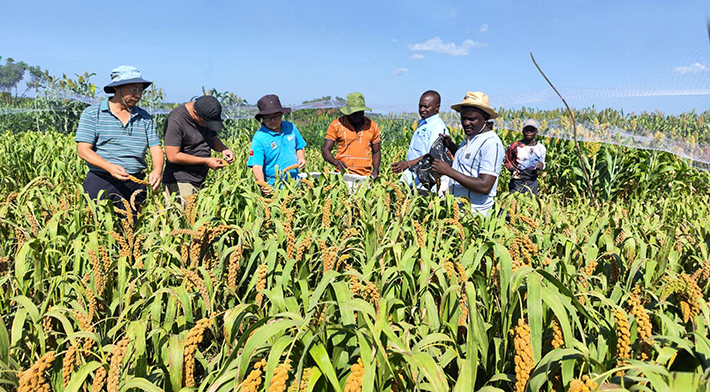
Andrew Wangota, a 48-year-old Ugandan farmer, has been using agrivoltaics technology, a solar technology that uses agricultural land for both food production and solar power generation, on his farm in Bunashimolo Parish, Bukyiende Subcounty in Uganda where he has been cultivating plantain, coffee and Irish potatoes for the past 16 years.
The technology has become an essential part of the Water-Energy-Food (WEF) Nexus, a Food and Agriculture Organisation-facilitated and China-supported South-South cooperation project that started in 2012 and is still ongoing. The project seeks to establish synergies in water, energy and food systems.
The technology was originally developed by a Ugandan private-sector agricultural organisation. Years later, farmers in Wangota’s village received similar low-cost technologies such as off-grid solar-powered irrigation and rainwater harvesting systems through the nexus.
Since its adoption, the agrivoltaics technology has enabled Wangota to conserve water, minimise the effects of drought and increase crop productivity. This has strengthened his food security and has also generated clean energy.
Other farmers in Wangota’s village have also adopted the technology for off-grid solar-powered irrigation, rainwater harvesting and other uses, aiming to diversify their incomes, reduce energy costs and enhance sustainability whilst helping to mitigate the impact of climate change.
Fredrick Mugabgandan, a sustainability expert in Uganda, highlighted the significance of the project. “The progress made by several farming communities in the region demonstrates the potential of WEF Nexus projects to enhance resilience and adaptation. By promoting sustainable agricultural practices and resource management, these China-supported WEF Nexus projects are contributing to economic growth and reducing poverty.”
China largely backs the region’s WEF Nexus projects in many ways including concessional loans, public-private partnerships and technology-transfer arrangements.
Mouhamadou Bamba Sylla, a climate change specialist and the AIMS-Canada Research Chair of Climate Change Science at the Kigali-based African Institute for Mathematical Sciences (AIMS), said China’s support was visible in renewable-energy projects across East Africa, such as Kenya’s partially complete Menengai Geothermal Project, which, when finished with all three plants, is expected to have installed capacity of 105 mw and provide clean, affordable and sustainable energy to approximately 500,000 units, including 70,000 households in rural areas and 300,000 small businesses and industries.
A critical link
Together with the solar mini-grids and wind farms in Tanzania and Ethiopia, targeted initiatives to advance rural electrification and green industrialisation are helping to ensure energy security, a crucial component of the WEF Nexus. With energy security in place, countries can strengthen resilience and promote sustainable development.
Elizabeth Lusweti, a Kenyan hydrologist and researcher with a focus on climate financing and the WEF Nexus, agreed, saying China’s support has been a critical enabler for implementing the region’s WEF Nexus and accelerating progress towards the UN Sustainable Development Goals (SDGs).
Development activities under Uganda’s $12.6 million South-South cooperation project are expected to benefit local farmers. They also include Kenya’s Lake Turkana Wind Power Project and the 50-mw solar facility in Garissa County, which supplies electricity to more than 350,000 people. Other initiatives, such as the large-scale Arusha and Dar es Salaam water-supply systems in Tanzania, are providing clean water to thousands of people.
Together, these projects are helping to strengthen East Africa, a highly climate-vulnerable region that still lags far behind, especially in meeting WEF-related SDGs including affordable clean energy, clean water and sanitation, zero hunger, no poverty and good health and well-being, Lusweti said.
In recent years, the UN has highlighted the WEF Nexus as a critical link for achieving multiple SDGs and implementing the Paris Agreement.
Meron Teferi Taye, an Ethiopian climate scientist and researcher at the International Water Management Institute, said China’s funding and technical assistance for individual projects addressing components of the region’s WEF Nexus were putting countries in a stronger position to reduce climate risk, boost resilience and pursue sustainable development.
An enhanced regional WEF Nexus will mean a more integrated and sustainable approach to supporting the well-being of the region’s growing population. It will promote resource efficiency across the three interconnected resources of water, energy and food, which are at the heart of Africa’s development agenda. The AU’s Agenda 2063 envisions, amongst other targets, improved water, energy and food security as a prerequisite to unlocking economic development on the continent.
China’s support
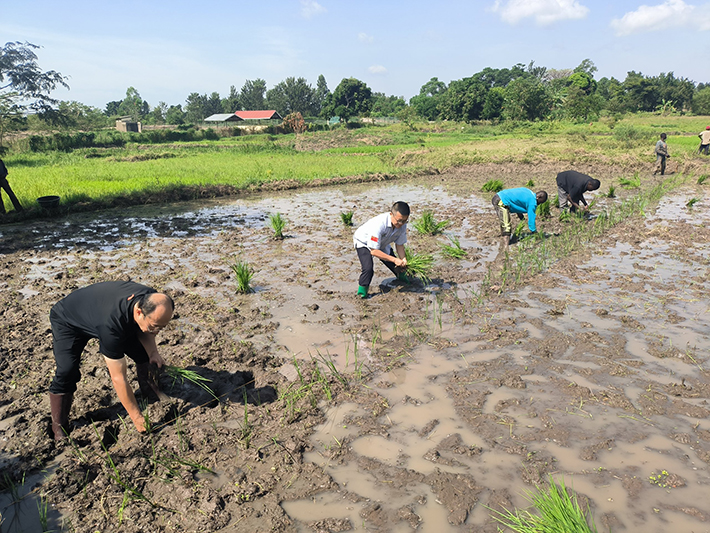
According to Ugandan environmental scientist Dorothy Abalo, Chinese technology and knowledge transfer through the South-South cooperation project has helped regional technocrats to better understand the WEF Nexus, leading to better trade-offs, enhanced synergies and improved resource management.
“In Rwanda, for example, the China-supported China-Rwanda Agriculture Technology Demonstration Centre has been a site of sustained technical exchange, with Chinese experts sharing practical knowledge in water management, renewable energy and sustainable agriculture. At the centre, Chinese specialists have trained hundreds of Rwandans in Juncao technology, helping to introduce an eco-friendly method for producing livestock feed and supporting environmental conservation,” Abalo said.
Chinese experts are also working with regional planners to integrate water, energy and agriculture, notably in Kenya’s Ewaso Ng’iro North Catchment, as part of a broader push to support sustainable land and water management and tackle the region’s WEF Nexus challenges.
